Home » The third shelf of food: when AI makes the choice
The third shelf of food: when AI makes the choice
Almost 24% of European consumers aged 18–34 have already used AI for grocery shopping
Artificial intelligence is entering one of the most important stages of the purchasing process: the moment when consumers search for information, compare products and decide which ones to consider.
In Europe, 38% of consumers use AI tools to research products or services and inform their purchasing decisions. Some 63% use them to compare brands, products, prices and reviews; 55% to learn more about a category or product; and 46% to discover new products and find inspiration.
In grocery, 12% of European consumers have already used AI for food shopping. Among them, 37% use it to research specific products, 40% to plan meals, and 36% to find prices or recipes that match their dietary needs.
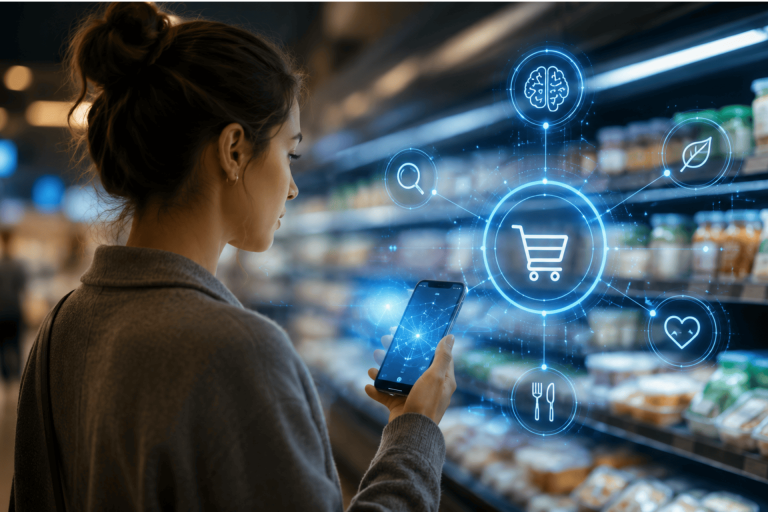
This is where a new competitive space for food products is emerging: the third shelf. Alongside the physical shelf in stores and the digital shelf of e-commerce, AI introduces another environment in which a product can be searched for, compared and selected.
When consumers ask an AI which products to buy, which ingredients to choose, which food to use for a specific recipe or which product meets a particular dietary need, AI can provide a selection of products.
The third shelf is therefore the space in which products enter the search process through AI’s ability to identify them, describe them and match them to the consumer’s request.
In food, information plays a central role: ingredients, allergens, nutritional values, certifications, product characteristics and usage information are among the elements that AI systems can use to respond to consumers’ requests.
The phenomenon is particularly relevant among younger consumers. In Europe, almost 24% of people aged 18–34 have already used AI tools for grocery shopping, compared with 4% of consumers over 55.
Consumers are also already showing a willingness to delegate part of their grocery shopping to AI. In Italy, 45.4% say they would be willing to delegate recurring grocery shopping to artificial intelligence.
AI-based research is currently concentrated mainly in the stages preceding the actual purchase. Usage declines when consumers move from research to basket building, checkout and automatic reordering.
The 2026 picture therefore shows a new stage in the relationship between consumers and food products: before reaching the supermarket shelf or an e-commerce product page, a product may have to pass through another filter — artificial intelligence.
The third shelf is precisely this: a new space in the decision-making process, where AI can determine which products consumers should consider.
Analysis by the Corte Parma-Amoretti Press Office
Sources
McKinsey & Company, Europe’s agentic commerce moment: Decision influence is here; execution is coming; AI to browse but not to buy; The State of Grocery Retail Europe 2026.
Dunnhumby, New Research: AI-Assisted Grocery Shopping Varies by Market.
Mastercard Innovation Forum 2026, ricerca sui comportamenti dei consumatori italian.
FoodNavigator Europe, AI and the Rise of Agentic Commerce in Food & Beverage.
*This image was generated using AI.